
Beneath the surface of every modern ship lie two fields of expertise that, more than any others, are responsible for the ship’s very existence and its ability to move: welding and joining technology on the one hand, and propulsion and turbine technology on the other. While welding specialists ensure that steel is transformed into a single, solid structural unit that can withstand decades at sea, propulsion specialists are responsible for everything that gets the ship moving and keeps it going—from classic diesel engines to LNG propulsion systems, fuel cells, and electric propulsion systems. Both fields are undergoing a phase of change and innovation and offer skilled workers excellent career prospects.
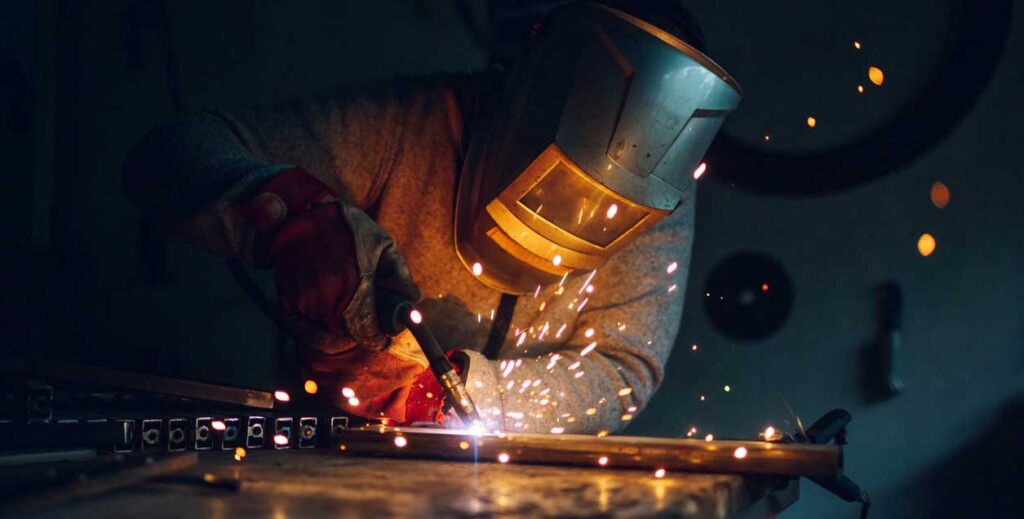
Specialists in Welding and Joining Technology for Shipbuilding
Welding and joining technology is an integral part of shipbuilding. It is a highly specialized engineering discipline—and shipbuilding is one of its most natural and demanding fields of application. Here, expert engineers and technicians join countless steel plates, sections, assemblies, and components together—creating not merely a collection of parts, but a continuous, monolithic structure that functions as a single unit and distributes forces evenly. This distinction—connection versus integration—is the essence of good welding and joining technology in shipbuilding.
Responsibilities of Welding and Joining Technology Specialists
In shipbuilding, specialists in welding and joining technology are much more than just skilled workers. They are the technical experts for everything related to joining technology—from process development to final quality inspection. Their core responsibilities include:
- Development and Optimization of Welding Processes: New steels, new alloys, new plate thicknesses, and new structural geometries require customized welding procedure specifications (WPS). Specialists develop and qualify these procedures in accordance with EN ISO 15614 and the regulations of the classification societies.
- Preparation of welding procedure specifications (WPS): For every safety-critical weld in shipbuilding, there must be an approved welding procedure specification that mandatorily specifies the process, base material, filler material, preheat temperature, heat input, and weld configuration.
- Coordination and Monitoring of Robotic Welding Systems: Modern shipyards use automated welding systems for panel production and repetitive standard welds. Welding and joining technology specialists program these systems, monitor their operation, and evaluate the quality of the welds produced.
- Non-Destructive Testing (NDT): After welding, the quality of the welds must be inspected—without damaging them. Specialists perform or coordinate ultrasonic testing, X-ray inspections, magnetic particle testing, and dye penetrant testing, and evaluate the results.
- Quality Assurance and Documentation: All welding work on safety-critical structures must be fully documented—including welder qualifications, procedures used, test results, and nonconformities. This documentation is part of the class documentation.
- Metallurgical Evaluation: If welds fail or exhibit defects, the cause must be analyzed metallurgically—cracks, porosity, bonding defects, and the risk of work hardening. Specialists understand the metallurgical causes and can implement targeted corrective measures.
- Research and Implementation of New Processes: Laser-beam hybrid welding, electron-beam welding, friction stir welding for aluminum, additive manufacturing (3D metal printing)—new processes are opening up possibilities that are increasingly being utilized in shipbuilding. Specialists support their implementation from the testing phase through to production readiness.
Training and Qualification Levels
The path to becoming a specialist in welding and joining technology is multi-stage and clearly structured. It begins with a vocational qualification as a welder with valid ISO 9606 certificates. Building on this, there is an internationally recognized qualification system developed by the German Association for Welding and Related Processes (DVS) in collaboration with the International Institute of Welding (IIW):
- International Welder (IW): Basic vocational training; certified welder for specific processes and materials
- International Welding Specialist (IWS): First-line management; responsible for performing welding work according to instructions, maintaining documentation, and conducting basic quality control
- International Welding Technician (IWT): Middle management; develops and reviews welding procedures, coordinates welders, and performs basic metallurgical evaluations
- International Welding Engineer (IWE): Highest qualification level; responsible for overall welding supervision at a shipyard or facility, the development of new processes, collaboration with classification societies, and metallurgical assessments
In addition, specialists can obtain certifications in nondestructive testing (NDT Levels 1–3 according to ISO 9712 or ASNT) for ultrasonic, radiographic, magnetic particle, and other methods. In shipbuilding, NDT Level 2 certifications are often required for performing inspections, and Level 3 certifications for responsibility for methods and evaluation.
Salary and Demand
The income of welding and joining technology specialists depends largely on their level of qualification. As a general guide:
- International Welding Specialist (IWS): 3,500–4,500 € gross per month
- International Welding Technician (IWT): €4,000–5,500 gross per month
- Experienced International Welding Engineer (IWE): 5,500–7,500 € gross per month
- Senior Welding Supervisor / Project Manager: up to €8,000 and more
Demand remains consistently high and is supported by structural trends: The construction of offshore platforms and LNG tankers requires welds that meet particularly stringent requirements; naval vessels (submarines, frigates) demand the highest quality standards; and the growing field of additive manufacturing—3D metal printing for maritime spare parts and components—is opening up entirely new areas of opportunity for specialists in welding and joining technology.
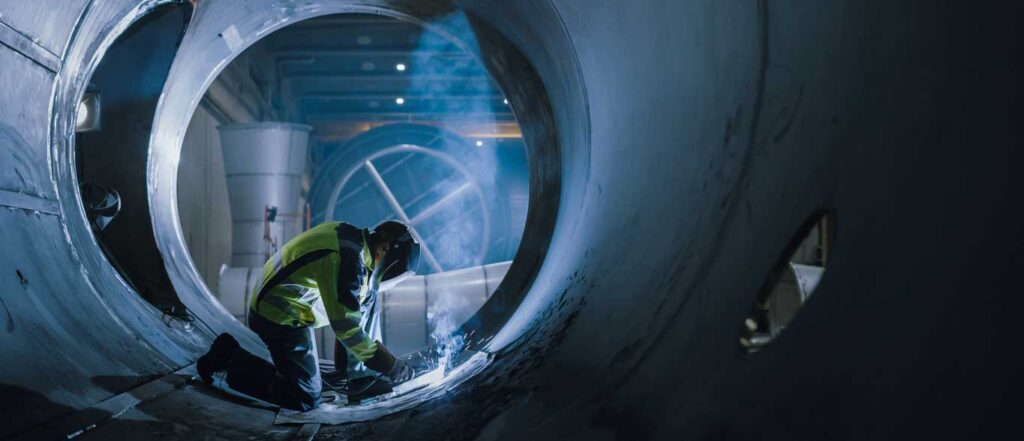
Specialists in Propulsion Systems, Turbines, LNG, and Alternative Propulsion Systems
In the field of propulsion technology, we are in the midst of a historic transformation. The classic two-stroke diesel engines, which shaped the landscape of deep-sea shipping for decades, are slowly fading into the background. New systems—electric marine engines, gas turbines, LNG propulsion systems, fuel cells, and hybrid propulsion systems—are shaping the future of maritime propulsion. This development is creating an enormous demand for highly specialized professionals who can combine traditional mechanical engineering expertise with knowledge of these new technologies.
Responsibilities of Drive Technology Specialists
Specialists in propulsion systems, turbines, LNG, and alternative propulsion systems handle a wide range of tasks in shipbuilding—from the development of new systems to commissioning and maintenance during operation:
- Development and preparation for mass production of new propulsion systems: New drive concepts are first built as prototypes, tested, and optimized. Drive specialists oversee this process from design through qualification to series production.
- Installation of main engines, gearboxes, and propellers: The mechanical integration of the powertrain—engine, clutch, transmission, shaft line, and propeller—requires the highest precision in alignment and assembly. Alignment errors lead to increased wear and vibration during operation.
- Integration of Exhaust Systems: Exhaust aftertreatment systems (SCR catalysts for NOx, scrubbers for SOx) must be integrated into the overall powertrain system and tuned to the engine's characteristics
- Power Distribution and Energy Management: On ships with multiple energy sources (diesel generators, batteries, fuel cells), the energy management system must be designed to maximize overall system efficiency and minimize emissions
- LNG-specific systems: For LNG-powered ships, propulsion specialists design and install cryogenic tank systems (at minus 162 degrees Celsius), vaporizers, gas treatment systems, and the comprehensive safety systems required by the IMO’s IGF regulations
- Integration of Fuel Cells and Battery Systems: Fuel cells and high-voltage batteries are used in particular on research vessels, ferries, and submarines. Integrating these systems into the overall propulsion system requires expertise in electrochemistry, power electronics, and thermal management.
- Commissioning and Testing: Before a ship is delivered, all propulsion systems are thoroughly tested—first in dry dock, then during sea trials. Propulsion specialists conduct these tests and document the results for classification societies and the client.
Profile and Qualifications
Propulsion system specialists are typically engineers with backgrounds in mechanical engineering, energy engineering, or marine engineering—supplemented by experienced marine engineers with specific additional qualifications. The most important areas of expertise are:
- Turbine Technology: Gas turbines are used on high-speed ferries, naval vessels, and LNG carriers; their design and maintenance is a specialized field
- Electric Mobility and Power Electronics: Frequency converters, inverters, and energy management systems for electric drives
- Control Engineering: Complex drive systems must be controlled by sophisticated control loops—speed, power distribution, load transients
- Cryogenic Technology: For LNG systems; handling low-boiling-point liquids at minus 162 degrees Celsius; insulation technology; safety systems
- Alternative Fuels: Methanol, ammonia, hydrogen—each fuel has its own specific requirements for storage, processing, and safe handling
- Classification and Approval Regulations: IGF Code for Gas Propulsion Systems, SOLAS Requirements for Propulsion Systems, DNV/Lloyd's Rules for Main Propulsion Systems
Salary and Career Prospects
The salaries of drive technology specialists reflect the rarity and complexity of their skills. Depending on experience, specialization, and area of responsibility, the following salary ranges are realistic:
- Entry-level / Marine Mechanic with Additional Qualifications: 4,500–5,500 € gross per month
- Experienced Engineers (Propulsion / LNG): 5,500–7,000 € gross per month
- Senior Specialists and Project Managers: €7,000–8,000 gross per month and more
The future outlook is excellent. The energy transition in shipping—driven by IMO climate targets, rising fuel prices, and international regulatory pressure—is making propulsion specialists the most sought-after engineers in the entire maritime industry. LNG is currently the most important bridging technology; methanol and ammonia are gaining importance; and hydrogen and fuel cells will play an increasingly significant role in the medium term. Each new generation of propulsion systems creates a need for specialists who can develop, install, commission, and maintain these technologies.

Real-World Example: All Disciplines Involved in the Construction of a Research Vessel
To illustrate how all the specialized fields described here interact in practice, the construction of a modern research vessel offers a clear example. Research vessels are among the most technically sophisticated types of ships: They must be quiet (so as not to interfere with measurement equipment), capable of precise positioning (for scientific work at sea), energy-efficient (for long voyages to remote waters), and equipped with a wide variety of scientific systems. Each field makes an indispensable contribution:
- Technical Systems Planners for Utility and Equipment Engineering design systems for drinking water, wastewater, ventilation, and air conditioning—tailored to the specific requirements of the onboard laboratories and research equipment
- Hydrodynamics and Fluid Mechanics Engineers optimize the hull shape not only for minimal drag and fuel consumption, but also for minimal noise and vibration transmission into the water—a critical feature for hydroacoustic research
- Welding and Joining Technology Specialists They develop high-strength welded joints for the hull and ensure that all welds comply with the strict classification society regulations for research vessels; non-destructive testing (NDT) ensures consistent quality
- Propulsion and Turbine Engineering Engineers They incorporate a hybrid propulsion system consisting of LNG generators and electric motors with battery storage—enabling low-emission electric operation in protected areas and during the use of hydroacoustic measuring devices
- Shipyard Engineering and Production Specialists digitally coordinate the entire construction process, track the status of each section and system in real time, and ensure that all trade teams can work on schedule without interfering with one another
Ultimately, all these systems come together to form a research vessel that consumes less energy, produces fewer emissions, can be positioned with greater precision, and is equipped with state-of-the-art scientific technology—all at a price that remains realistic thanks to efficient production and coordinated planning.
Future Prospects and the Joint Contribution of All Disciplines
The shipbuilding industry is undergoing a transformation that affects and challenges all of the specialized fields described in equal measure. Sustainability, digitalization, and international regulation are driving innovation at a pace that the industry has rarely experienced in its long history:
- Welding and Joining Technology must master new materials—high-strength lightweight steels, aluminum composites, and additively manufactured components—and integrate new processes such as friction stir welding and hybrid laser welding into mass production
- Drive Technology is facing what may be the biggest transformation since the introduction of marine diesel engines: hydrogen, ammonia, methanol, and battery systems require fundamentally new expertise in planning, installation, and operation
- Systems Engineers, Hydrodynamicists, and Shipyard Engineering Specialists are increasingly working in digital environments—3D models, digital twins, AI-driven optimization, and real-time production control are already a reality at leading shipyards
Together, all these specialists combine craftsmanship with engineering expertise and digital skills. They are not isolated groups of specialists—they are a connected team working toward a common goal: building ships that are safer, more efficient, cleaner, and more economical than their predecessors. For skilled professionals who are willing to continuously develop their skills, modern shipbuilding offers a stable, well-paid, and future-proof career path.
| Field of Study | Core Task | Path to Qualification | Growth Drivers | Salary (gross/month) |
|---|---|---|---|---|
| Welding & Joining Technology (IWS) | Implementation, Documentation, Quality Control | Welders + IWS Course | LNG Tankers, Offshore, Marine | 3,500–4,500 € |
| Welding & Joining Technology (IWT) | WPS Development, Welding Coordination, NDT | IWS + IWT Continuing Education | Quality Standards, New Steels | 4,000–5,500 € |
| Welding Engineer (IWE) | Welding Supervision, Metallurgy, Classification | Engineering Degree + IWE Course | 3D Printing, Offshore, Marine | 5,500–8,000 € |
| Drive Technology (Beginners) | Installation, Commissioning, Maintenance | Mechanical Engineering / Marine Engineer | Hybrid powertrains, LNG | 4,500–5,500 € |
| Drive Technology (Senior) | System Integration, Development, Project Management | Engineer + Special Qualifications | Hydrogen, Fuel Cells, Ammonia | 7,000–8,000 €+ |
Frequently Asked Questions About Welding and Propulsion Technology Specialists in Shipbuilding
A welder performs welding work according to specified instructions and holds technical certifications (ISO 9606). A welding engineer (IWE) represents the highest level in the international IIW qualification system: He develops welding procedures, bears technical responsibility for the entire welding supervision process, evaluates metallurgical issues, collaborates with classification societies, and is authorized to conduct welder examinations. Between these two levels are the Certified Welding Specialist (IWS), responsible for coordination and documentation, and the Welding Technician (IWT), responsible for process development—a clear tiered model with correspondingly increasing requirements and compensation.
Non-destructive testing allows for the assessment of the quality of materials and welds without damaging the component. In shipbuilding, the following NDT methods are most commonly used: ultrasonic testing (UT) for internal defects in welds and sheet metal; radiographic testing (RT) for porosity, slag inclusions, and cracks; magnetic particle testing (MT) for surface cracks in ferromagnetic steels; Penetrant testing (PT) for surface defects in non-magnetic materials; and visual inspection (VT) as a basic check of all welds. Classification rules define which method must be used where, with what scope of inspection.
LNG (Liquefied Natural Gas) is currently the most important alternative marine fuel and is considered a bridge technology on the path to zero-emission shipping. It reduces SOx emissions almost entirely, NOx by approximately 85 %, and CO₂ by 20–25 % compared to heavy fuel oil. Major shipping companies such as MSC, CMA CGM, and AIDA already operate extensive LNG fleets. In the long term, LNG will be supplemented or replaced by green methanol, ammonia, and hydrogen—but building the infrastructure and developing the skilled workforce for these next-generation technologies will take time. LNG specialists will therefore remain in demand for many years to come.
Special requirements apply to working with LNG systems on ships. Technicians and engineers must be familiar with the IMO’s IGF Code (International Code of Safety for Ships using Gases or other Low-flashpoint Fuels) as well as the relevant classification society rules. Seafarers and marine engineers who work with LNG systems must complete specific STCW training for gas-fueled ships. Engineers who design and install LNG systems also need knowledge of cryogenic technology (handling at minus 162 degrees Celsius), gas detection technology, and emergency systems.
Tighter than one might think at first glance. A ship’s engine room and propulsion system are embedded in the steel structure—foundation frames for engines and generators are welded in place; shaft guides are incorporated into the hull; exhaust piping is routed through bulkheads and welded in place. All of this requires skilled welding work based on precise plans. At the same time, propulsion specialists ensure that vibrations from the propulsion system do not place excessive stress on the welds—a design challenge that both disciplines must address together.
Yes. Eastern European countries provide high-level training for both types of specialists. Welding engineers (IWE) from Poland, Ukraine, and Croatia are active in the maritime industry and work at German shipyards through direct placement or temporary employment. The IWE qualification is internationally standardized and recognized in Germany without the need for additional testing. Propulsion engineers from the Ukrainian shipbuilding center of Mykolaiv have studied at one of Eastern Europe’s most renowned maritime universities and bring in-depth technical expertise to the table. As a staffing agency, we assist with the identification, pre-selection, and placement of these highly sought-after specialists.
Are you looking for welding engineers (IWE/IWT), NDT inspectors, or drive systems engineers for your shipyard or marine engineering company? We place highly qualified specialists from Eastern Europe—with internationally recognized certifications and shipbuilding experience.