
Mechanics and technicians in shipbuilding serve as the link between the drawing board and the finished ship. They bring the plans of engineers and designers to life—across a very broad range of tasks. From building the ship’s hull to installing complex piping systems, commissioning engine rooms, and performing deck duties at sea: mechanics and technicians keep the shipbuilding industry running. This article explains the different career paths available, what they entail in detail, how the training program is structured, and what opportunities for further training exist.
The Role of Mechanics and Technicians in Shipbuilding
In shipbuilding, mechanics and technicians play a key role: They translate technical plans and design drawings into finished components, assembled systems, and operational equipment. Without them, even the best engineering designs could not be brought to life. Their work covers the entire spectrum of shipbuilding production:
- The Manufacturing the various components and products according to technical drawings and manufacturing plans
- The Assembly and Installation these components in their designated locations on the ship
- The Setup and Commissioning of machines, equipment, and systems
- The current Maintenance and Servicing all mechanical and hydraulic systems
- The implementation of Safety, Quality, and Functionality Tests on components and systems
In other words: Through their work, mechanics and technicians ensure that a ship is not only built, but also operates safely, efficiently, and reliably—whether in port, on the high seas, or at the shipyard during an overhaul.
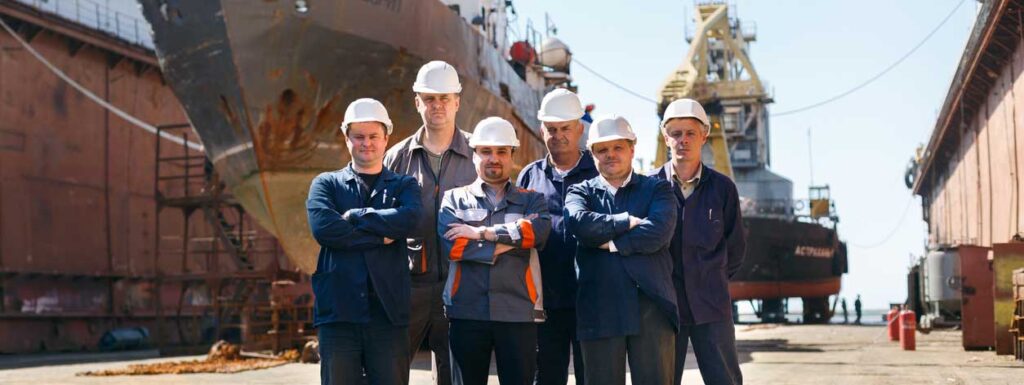
What are the core responsibilities of mechanics and technicians in shipbuilding?
Regardless of which of the four occupational fields a mechanic works in, there are a number of tasks that apply equally to all of them. These common core tasks form the basis of every mechanical and technical activity in the maritime industry:
- They read and interpret technical drawings and manufacturing plans and translate these into specific manufacturing and assembly steps
- They present Metal components They process and install these according to specifications
- They use various Joining Techniques such as screws, rivets, pressing, and welding
- They test components and systems for Safety, Quality, and Functionality
- They take Operational Facilities and Systems and check that they are working properly
- You maintain, repair, and preserve Keep mechanical and hydraulic systems in good working order
These core competencies are not industry-specific; rather, they apply wherever machines and systems are built, operated, and maintained. In shipbuilding, however, there are additional specific requirements: working in extremely confined spaces, under variable environmental conditions, in accordance with strict classification regulations, and often in shifts—both at the shipyard and at sea.
What are the differences and areas of specialization among the four fields of study?
Within the broad field of shipbuilding mechanics and technicians, there are four clearly defined specializations. Each has its own area of expertise, its own tools, and its own specific requirements.
Mechanical Fabricator
Structural mechanics are the steel fabricators of the shipbuilding industry. They work with steel and aluminum to fabricate the individual sections that are later assembled into the finished ship’s hull. They cut sheet metal to size, shape and bend it, weld sections together, and assemble large components such as decks, bulkheads, and hull sections.
Structural mechanics must have a deep understanding of the properties of metal: How does steel behave during welding? What types of distortion result from heat input, and how can they control it? How are large assemblies precisely aligned and joined? Their work literally forms the foundation of the ship—because without a properly constructed hull, there is no ship.
Industrial Mechanic
Industrial mechanics ensure that the machinery and equipment—both at the shipyard itself and on the ships—function without problems. They assemble machinery systems, test their operation, perform scheduled maintenance, and troubleshoot malfunctions. At the shipyard, they ensure that production equipment (welding machines, cranes, conveyor systems) is always ready for operation. On a ship, they are responsible for keeping engine rooms operational and repairing them as needed.
Their expertise covers mechanical engineering, various manufacturing processes, drive technologies, and systematic maintenance based on maintenance schedules. They work closely with engineers and marine mechanics when major repairs or overhauls are needed.
Marine Mechanic
Marine mechanics are the all-arounders of the shipbuilding industry. They bridge the gap between shipyard operations and onboard duties, thereby connecting the technical world with practical seafaring. This makes their profession particularly versatile, but also particularly demanding.
On the technical side, they handle the installation, maintenance, and repair of machinery and technical systems: engines, generators, winches, and pumps fall within their area of responsibility. They conduct regular inspections, check oil levels, temperatures, and pressures, and resolve minor malfunctions directly on site before a small defect turns into a major problem.
The seafaring aspect involves deck duties. Here, they assist with the various tasks that arise, particularly in port: harbor maneuvers during docking and undocking, mooring the ship, loading and unloading cargo, and safety inspections designed to ensure that the cargo and the ship are in proper condition.
For this work, marine engineers need more than just manual dexterity and technical knowledge. They must also be seafaring—that is, they must be able to work safely and precisely even on a rocking ship. Added to this are the unique aspects of working at sea: marine engineers often spend weeks and months far from home, working under varying climatic conditions—from Arctic cold to tropical heat—and frequently on rotating shifts around the clock.
Even at the shipyard, the job requires flexibility: Marine mechanics help commission new ships and overhaul machinery—and they often do so not only at their home shipyard but also in other ports and shipyards, depending on where the job takes them.
Plant Mechanic
Plant mechanics are responsible for the energy and utility systems on board. A modern ship has an extensive network of pipes and valves that literally runs throughout the entire ship—and without which no system on board would function. This network transports lubricating oil, fuel, cooling water, steam, gas, and wastewater to the respective consumers and disposal facilities.
Plant mechanics plan and install these complex piping systems. They not only lay the pipes and install the valves—they also check the entire piping networks for leaks and ensure that all connections meet the required safety standards. In their work, they use various materials: stainless steel for areas prone to corrosion, copper for certain fluid lines, and special composite materials for high-pressure applications. This requires that they know the physical and chemical properties of these materials and can assess them correctly.
To carry out their tasks, plant mechanics are proficient in a wide range of joining and sealing techniques. In addition to traditional welding, they use orbital welding—a fully automated welding process for piping systems with the highest quality requirements—and press-fitting techniques. They install gaskets and flange connections, set up safety valves and pressure relief devices, and finally conduct extensive pressure tests to ensure there are no leaks.
Why are plant mechanics so important? It’s simple: Without functioning supply lines, not a single system on a ship can operate. Without fuel lines, there is no fuel for the engines—and thus no propulsion and no power supply. Without cooling water lines, the engines overheat. Without lubrication systems, the bearings wear out. In addition, marine engineers also install auxiliary and safety systems that continuously monitor all equipment, thereby contributing to safe and efficient ship operation.
| Field of Study | Main Materials | Core Activities | Typical location of use |
|---|---|---|---|
| Mechanical Fabricator | Steel, aluminum | Fuselage construction, section fabrication, welding of large assemblies | Shipyard (hall and dock) |
| Industrial Mechanic | Steel, cast iron, plastic | Machine Assembly, Manufacturing Processes, Drive Technology, Maintenance | Shipyard and Engine Room |
| Marine Mechanic | Steel, aluminum, composite materials | Installation and Maintenance of Marine Systems, Deck and Port Services | Shipyards and Ships (Worldwide) |
| Plant Mechanic | Stainless steel, copper, composite materials | Pipeline Construction, Valve Installation, Leak Testing, Safety Systems | Shipyard and Ship (Hull Construction & Outfitting) |
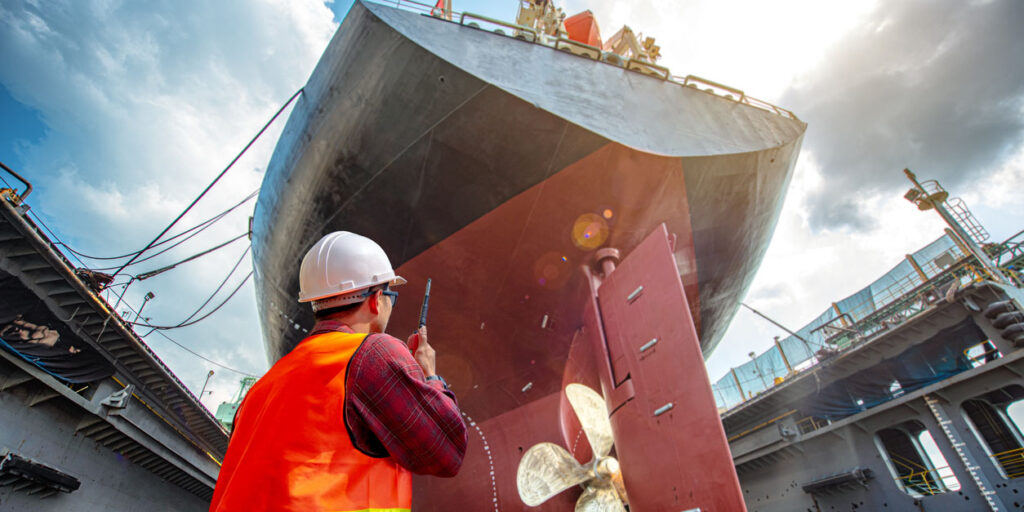
Apprenticeship as a Shipbuilding Mechanic – Dual System
All four of the trades described—construction mechanic, industrial mechanic, marine mechanic, and plant mechanic—are taught through the dual training system. This means that theory and practice are integrated from the very beginning. The training program typically lasts three and a half years.
The theoretical foundations are taught at vocational school. Here, the apprentices learn the technical basics: knowledge of materials and their properties, technical systems and how they interact, fundamental laws of physics, as well as occupational safety and environmental protection. At the same time, they complete their practical training at a training company—a shipyard, a shipbuilding supplier, or a repair facility. There, they apply what they have learned to specific work tasks and gain their first professional experience.
What are the common training topics across all four specializations?
There are a number of topics that are common to all four specializations, as they form the foundation of every mechanical and technical activity in shipbuilding:
- Technical Drawing: Reading, Understanding, and Applying Manufacturing Drawings, Welding Plans, and Assembly Plans
- Metalworking: Welding, grinding, drilling, sawing, filing—the basic manual techniques of metalworking
- Assembly and Joining Techniques: Screws, rivets, pressing, various welding methods
- Measurement and Testing Technology: Quality Assurance Through Measurement, Testing, and Documentation
- Workplace Safety: Accident Prevention Regulations, Personal Protective Equipment, Hazardous Materials Training
- Environmental Protection: Regulations and Measures for the Environmentally Sound Handling of Operating Materials and Waste
- Fundamentals of Electrical Engineering, Pneumatics, and Hydraulics: Understanding of Power Supply and Control Systems in Machines and Plants
What are the specific curriculum components for each field of study?
In addition to the common curriculum, each department teaches the specific techniques and knowledge required for its area of focus:
- Mechanical Fabricator They deepen their knowledge in the areas of welding techniques (MAG, TIG, submerged arc), metalworking, fuselage construction, and the assembly of large subassemblies. Particular emphasis is placed on addressing welding distortion and ensuring dimensional accuracy during assembly.
- Industrial Mechanic learn more about mechanical engineering, specific manufacturing processes, various drive technologies, and the systematic maintenance of production facilities. This also includes reading and analyzing machine documentation and maintenance manuals.
- Marine Mechanic They cover course material on ship propulsion systems, the fundamentals of navigation, safety and rescue techniques, and marine engineering. In addition, they receive training in seafaring tasks such as standing watch and working safely on deck.
- Plant Mechanic They gain in-depth knowledge of piping technology, fluid technology, sealing technology, and the operation of pressure systems. They learn to read piping isometrics, bend and join pipes, and prepare and evaluate test reports for pressure tests.

What further training opportunities are available after completing an apprenticeship?
Completing an apprenticeship as a shipbuilding mechanic is not the end of the road, but rather the starting point. Those who wish to advance—in terms of expertise, responsibility, and salary—have various options for further training after completing their apprenticeship:
- Industrial Foreman (Metal): The master craftsman certification enables individuals to take on training responsibilities, lead teams, and independently plan and manage manufacturing processes. The Industrial Master Craftsman in Metalworking is one of the most prestigious certifications in the metalworking industry and opens the door to leadership positions at shipyards and in supplier companies.
- State-Certified Technician – Specialization in Mechanical Engineering / Naval Architecture: This degree places the holder between a skilled worker and an engineer. State-certified technicians take on planning and coordination tasks, assist engineers with technical design, and often work as construction managers, installation supervisors, or technical project assistants.
- Degree in Marine Engineering, Mechanical Engineering, or Electrical Engineering: Those seeking an academic degree can begin an engineering program by attending a vocational school, earning a qualification for admission to a university of applied sciences, or through adult education. Many universities recognize the professional experience gained during vocational training and offer accelerated degree programs. A degree in naval architecture then opens doors to careers in design, development, and project management.
In addition to these formal degrees, there are numerous certifications available in the field: Welding qualification tests in accordance with ISO 9606 for additional processes and materials, competency exams for working in confined spaces or under pressure, as well as specific training courses for new technologies such as LNG piping systems or automated welding systems.
Why are skilled workers from Eastern Europe in such high demand in the shipbuilding industry?
German shipyards are facing a structural shortage of skilled workers—particularly in the fields of construction mechanics, marine mechanics, and plant mechanics. Eastern European countries such as Poland, Croatia, and Ukraine have a long tradition in shipbuilding and and have qualified professionals with experience in shipbuilding who can meet the qualification requirements relevant to German shipyards. Welding examinations in accordance with ISO 9606 are internationally recognized and facilitate employment at German shipyards. However, specific recognition depends on the scope of the certificate and the requirements of the respective client.
As a specialized staffing agency with over 35 years of experience, we place qualified mechanics and technicians from Eastern Europe at German shipyards—through temporary staffing, service contracts, or direct employment. All candidates are screened for qualifications, certifications, and German language skills before placement.
Frequently Asked Questions About Mechanics and Technicians in Shipbuilding
The main difference lies in the scope of work and the combination of tasks. Industrial mechanics focus on the assembly, maintenance, and repair of machinery and equipment—either at the shipyard or in a ship’s engine room. Ship mechanics, on the other hand, are all-arounders who combine both worlds: They perform technical work on board while also carrying out seafaring duties on deck. They must be fit for sea service and spend extended periods at sea—something that generally does not apply to industrial mechanics.
Apprenticeships for construction mechanics, industrial mechanics, and plant mechanics typically last three and a half years under the dual system. The apprenticeship for marine mechanics lasts three years. Training takes place at vocational schools and in the training company. After passing the final exam, trainees receive a certificate from the relevant authority, which serves as proof of qualification for entering the workforce.
Plant mechanics in shipbuilding primarily use processes suitable for piping systems. These include TIG welding (tungsten inert gas welding, Process 141) for high-quality, leak-tight joints, particularly in stainless steel piping. Orbital welding—an automated process in which the welding head rotates around the pipe—is used to produce consistently high-quality circumferential welds on pipes. In addition, MAG welding is used for larger components, and press-fitting techniques are employed for certain media lines. Depending on the application, material, welding process, and the client’s specifications, valid welder qualifications in accordance with ISO 9606 may be required for pressurized piping systems.
After completing the apprenticeship, several paths for further qualification are available: The industrial foreman in metalworking leads to management and training positions. The state-certified technician specializing in mechanical or naval engineering occupies a position between skilled worker and engineer and is qualified to perform planning and coordination tasks. Those aiming to pursue a college degree can study naval engineering, mechanical engineering, or electrical engineering with a technical college entrance qualification or a high school diploma. Many colleges recognize professional experience, thereby facilitating the transition to college.
This depends on the specific job, the available proof of qualifications, and the shipyard’s requirements. Valid welding certifications in accordance with ISO 9606-1 can facilitate employment, but their validity and scope of application must be verified on a case-by-case basis. For many unregulated professions, no formal recognition is required; however, an equivalency assessment may be useful in individual cases or relevant for residency purposes. Shipyards may require practical aptitude tests, on-the-job training, and sufficient German language skills for safety briefings before assigning workers to safety-critical areas. As a staffing agency, we conduct comprehensive qualification checks before placing candidates.
Compensation depends on the field of specialization, professional experience, and the employer. As a general guideline: Entry-level construction mechanics earn between 2,600 and 3,200 euros gross per month; with experience and welding certifications, the salary rises to 3,400 to 4,000 euros. Marine mechanics at sea often receive higher pay (starting at 3,000 euros) plus on-board bonuses and shift differential pay. State-certified technicians earn between 3,500 and 4,500 euros; industrial foremen with managerial responsibilities can earn significantly more.
Are you looking for construction, marine, or plant mechanics for your shipyard? We place qualified professionals from Eastern Europe—vetted, German-speaking, and available within 7–10 days.